
Health Card Scheme Pakistan
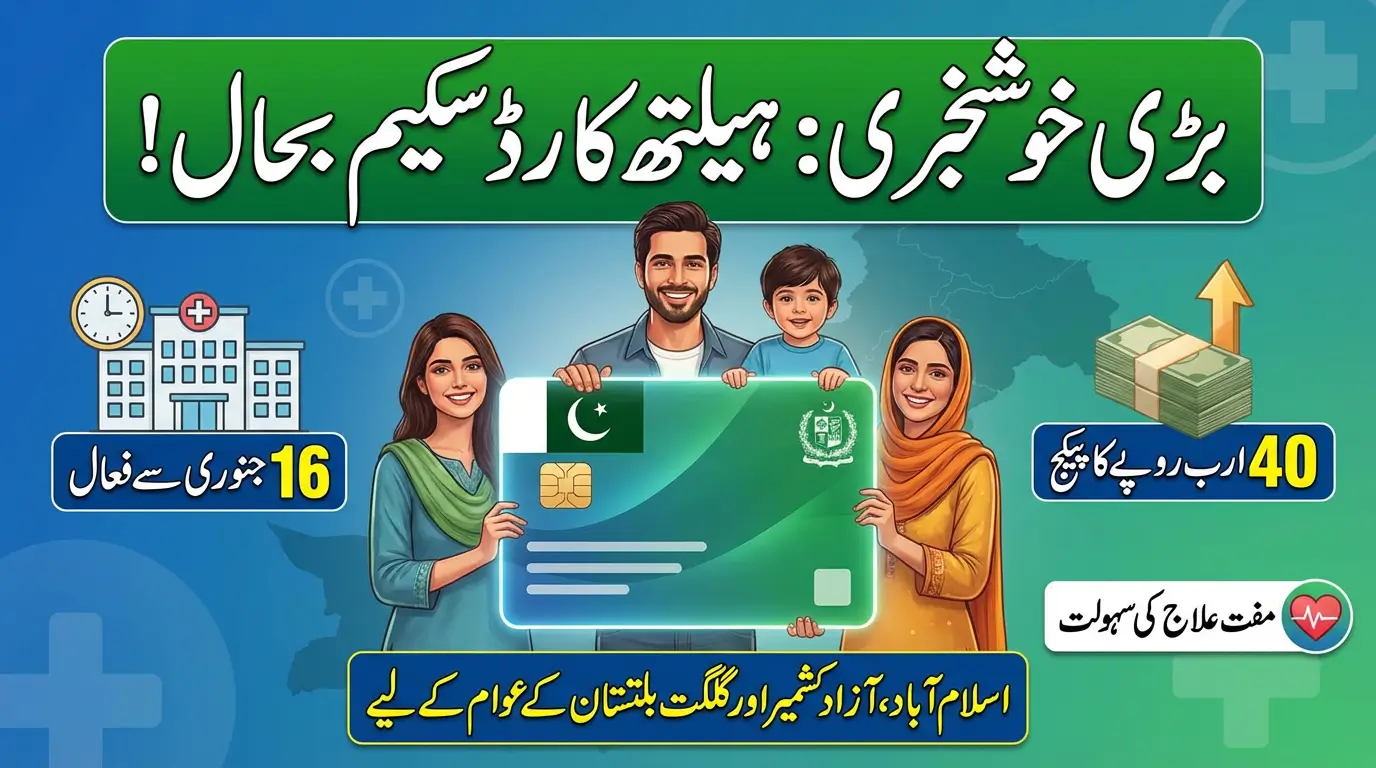
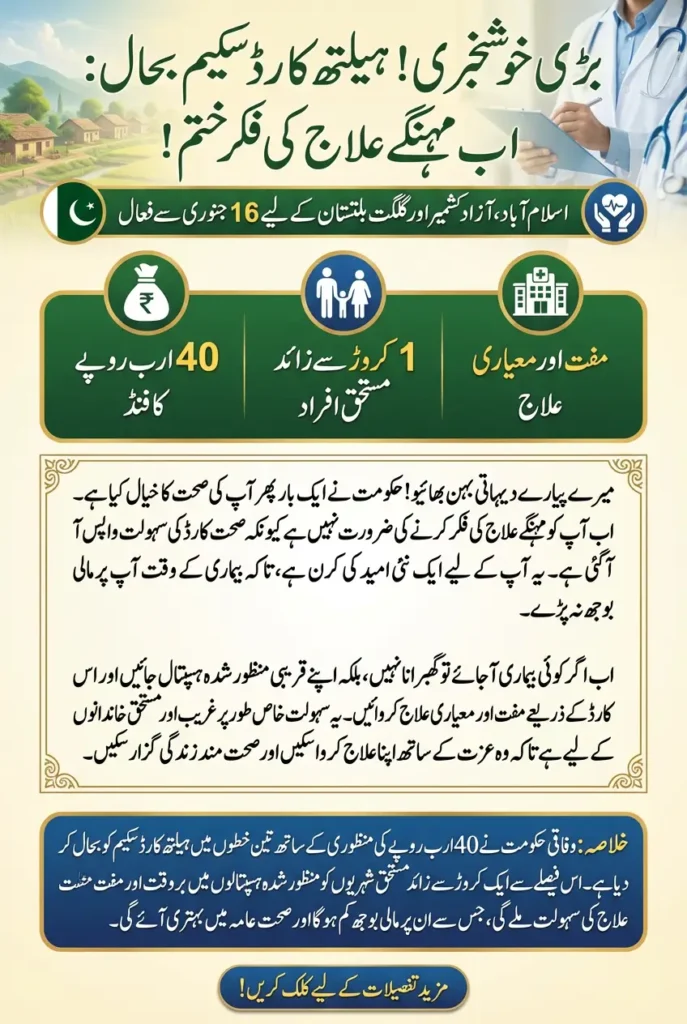
Health Card Scheme Pakistan: The federal government has taken a major step in the healthcare sector by announcing that the health card scheme has been restored for Islamabad, Azad Kashmir, and Gilgit-Baltistan. This decision brings renewed hope to millions of people who rely on public healthcare support for essential medical treatment. The restoration reflects the government’s commitment to improving access to healthcare for deserving families.
The health card scheme will be officially activated from January 16, allowing eligible citizens to start using it for treatment services. With rising medical costs, the revival of this program is expected to reduce the financial burden on low-income households and ensure timely access to quality healthcare facilities.
- The health card scheme was restored by the federal government
- Covers Islamabad, Azad Kashmir, and Gilgit-Baltistan
- Activation date set for January 16
Government Approval and Rs 40 Billion PC-1 Allocation
A key element behind the restoration of the health card scheme is the approval of a PC-1 worth Rs 40 billion. This significant financial allocation highlights the scale of the healthcare relief package and the seriousness of the government’s approach toward strengthening the health sector. The funding will support hospitals, treatment costs, and the smooth implementation of the scheme.
The Rs 40 billion approval ensures that healthcare providers can deliver services without delays or shortages. It also allows the government to manage the scheme sustainably while expanding coverage for deserving families across the three regions.
- PC-1 approved worth Rs 40 billion
- Strengthens healthcare infrastructure
- Ensures smooth scheme implementation
Punjab Government Ends Polio Duty for Teachers Across the Province
| Component | Details |
|---|---|
| Total Allocation | Rs 40 billion |
| Activation Date | January 16 |
| Covered Regions | Islamabad, AJK, Gilgit-Baltistan |
Who Will Benefit from the Health Card Scheme Restored
More than one crore citizens are expected to benefit from the restored health card scheme. The program is specifically designed for deserving families, ensuring that those who cannot afford expensive medical treatment receive proper care. Residents of Islamabad, Azad Kashmir, and Gilgit-Baltistan will be able to access treatment through registered healthcare facilities.
By targeting low-income households, the health card scheme aims to promote social protection and reduce inequality in healthcare access. Families that were previously struggling with medical expenses will now have a reliable support system.
- Over one crore citizens to benefit
- Focus on deserving and low-income families
- Equal access across three regions
BISP 8171 January 2026 Installment: Which Districts Received Rs 13,500
Treatment Facilities Available Under the Health Card Scheme
Under the restored health card scheme, beneficiaries will be able to receive a wide range of treatment facilities. These include medical services at approved hospitals without direct payment, helping families avoid out-of-pocket expenses during emergencies or long-term illnesses.
The scheme is designed to improve healthcare access by allowing citizens to seek timely medical attention. This not only improves health outcomes but also reduces pressure on household finances, especially for families facing chronic health issues.
- Access to approved hospitals
- Reduced out-of-pocket medical expenses
- Improved emergency and routine care
| Benefit Area | Impact |
|---|---|
| Medical Costs | Significantly reduced |
| Hospital Access | Improved and timely |
| Financial Relief | Strong support for families |
Samsung 130-Inch Micro RGB TV Combines Advanced AI and True
Impact of Health Card Scheme Restoration on Public Health
The restoration of the health card scheme is expected to have a positive impact on public health in the covered regions. By making healthcare more accessible, the government aims to encourage early treatment and preventive care, which can reduce severe health complications in the long run.
This initiative also strengthens the overall healthcare system by increasing patient flow to registered hospitals and ensuring better utilization of medical resources. Over time, it can contribute to healthier communities and reduced healthcare inequalities.
- Encourages early medical treatment
- Improves healthcare system efficiency
- Supports long-term public health goals
Government’s Commitment to Healthcare Relief
The revival of the health card scheme reflects a broader government strategy to prioritize healthcare relief. By investing heavily in the health sector, the federal government is signaling its intention to protect vulnerable populations and improve living standards.
This decision also builds public trust, as citizens see tangible steps being taken to address their healthcare needs. The health card scheme stands as a key pillar in the government’s social welfare initiatives.
Conclusion
The decision to restore the health card scheme for Islamabad, Azad Kashmir, and Gilgit-Baltistan is a major relief for millions of citizens. With activation starting from January 16 and a Rs 40 billion allocation approved, the scheme promises improved access to healthcare and financial protection for deserving families. This move is expected to strengthen public health and bring long-term benefits to the healthcare system.
Honda Civic 2026 Facelift Price List Revealed: Bookings Open for New